Quick Answer
- No Human Infection Risk: The cancer cells found in brown bullhead catfish cannot infect humans or jump to other species.
- Two Main Tumor Types: These fish suffer from pollution-linked liver tumors and a newly found contagious skin cancer.
- General Handling Safety: Catching or touching these fish is safe, but experts strongly warn against eating any fish with visible sores or growths.
🚨 EMERGENCY WARNING FOR HUMAN HEALTH
While fish cancer is not contagious to humans, wild fish living in polluted waters can build up high levels of toxic chemicals like mercury, PCBs, and industrial waste in their meat. If you or a loved one experiences severe stomach pain, vomiting, breathing troubles, or sudden neurological problems after eating wild-caught fish, seek immediate emergency medical care or call the Poison Control Center right away.
Unique Clinical Takeaways
This guide goes beyond basic symptoms to offer specific, practical insights for families, local fishers, and communities:
- Ecosystem Health Reflects Local Risks: Tumors in brown bullhead catfish serve as an early warning sign for human communities. When local catfish show high rates of liver cancer, it proves that dangerous cancer-causing chemicals are present in the shared water and sediment. Communities can use this data to track the safety of local environments and push for better stormwater and waste management systems.
- Strict Dietary Separation Matters: Even though you cannot catch melanoma or liver cancer directly from a fish, sick fish must never be eaten. Tumors completely change the nutritional value of the meat and frequently hide high concentrations of heavy metals or industrial poisons that can cause chronic illness in humans.
- Safe Tracking Protocols Promote Public Health: Caregivers and anglers can safely act as community scientists. You can handle, measure, and photograph these fish without any personal medical risk. Reporting sightings of dark, raised skin lesions to local environmental departments helps tracking efforts without creating any danger to your household health.
What is Brown Bullhead Catfish Cancer?
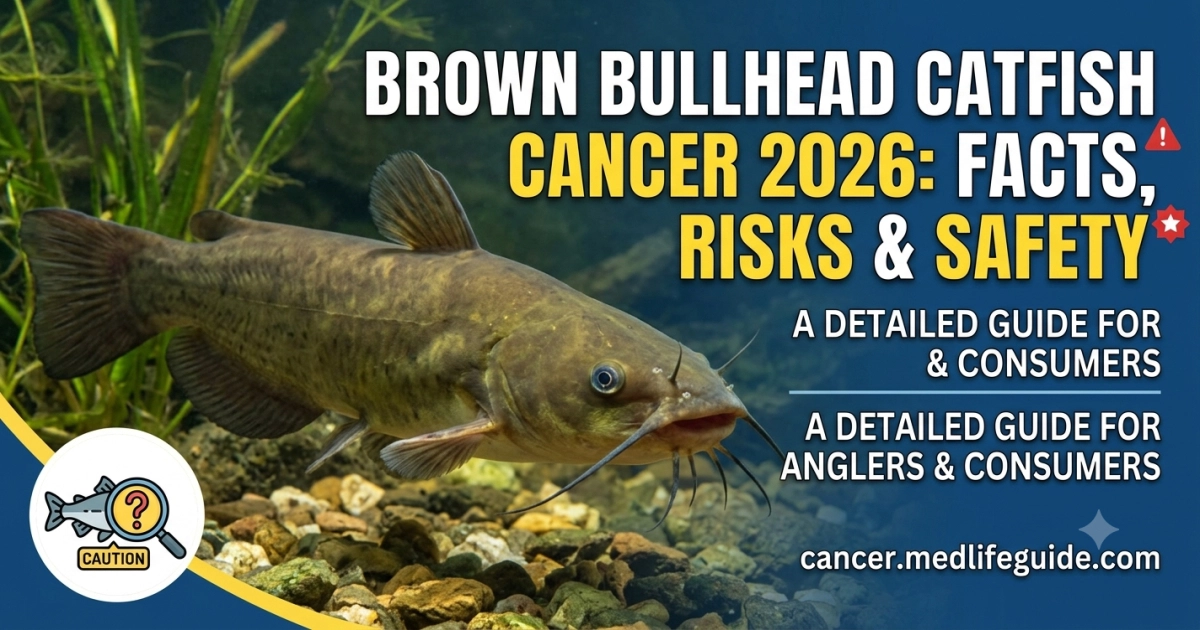
The brown bullhead catfish is a tough, bottom-dwelling fish found in many rivers and lakes across North America. Because they live on the muddy bottom and eat creatures in the sediment, they are deeply exposed to whatever settles in the water. For decades, scientists have studied these fish because they act like a “canary in a coal mine” for water health.
When we talk about brown bullhead catfish cancer, we are looking at two very different medical conditions: internal liver cancer and external skin cancer.
Chronic Pollution and Liver Tumors
For many years, liver cancer in these catfish was linked directly to human pollution. When factories, roads, and cities dump waste into rivers, chemicals called polycyclic aromatic hydrocarbons (PAHs) settle into the mud. As catfish forage in the mud, they swallow these toxins. This chronic exposure triggers severe damage in their liver cells, eventually leading to malignant liver tumors.
The New Transmissible Skin Cancer
A groundbreaking medical discovery changed how scientists view fish health. Researchers discovered that a massive spike in skin tumors among catfish in Lake Memphremagog (on the Vermont-Quebec border) was actually a transmissible cancer.
This is not a typical cancer caused by sun damage or bad genes. Instead, it is a contagious melanoma. The cancer cells themselves act like a parasite, jumping from one fish to another through close physical contact during spawning season. It is only the fourth type of transmissible cancer known in the entire animal kingdom.
Causes and Environmental Risk Factors
Understanding what triggers these tumors helps clarify the broader health patterns in our shared waterways.
Chemical Contaminants (PAHs and PCBs)
Polycyclic aromatic hydrocarbons (PAHs) come from burning coal, oil, gasoline, and wood. They are common in asphalt pavement sealers and industrial runoff. When rainwater washes these chemicals into local streams, they bind to the bottom sediment. Other toxic chemicals, like polychlorinated biphenyls (PCBs), also linger in the mud and make the liver tumors grow even faster.
How the Contagious Skin Cancer Spreads
The transmissible melanoma spreads through direct cell transfer. During the spring, brown bullheads gather closely in shallow waters to mate. In these crowded clusters, the fish frequently scratch or bite one another. If a healthy fish has a tiny scrape, floating cancer cells shed by an infected fish can settle into the wound and start growing. Whole-genome sequencing has proven that these tumor cells share identical genetic mutations across different fish, showing they all come from one single original cancer line.
Signs and Symptoms in Fish
While you will not look for these signs in a human patient, knowing what these tumors look like helps you identify unsafe fish immediately when out on the water.
| Feature | Toxic Liver Cancer | Transmissible Skin Cancer (Melanoma) |
|---|---|---|
| Primary Location | Internal liver tissue (not visible externally) | External skin, mouth, fins, and around eyes |
| Early Appearance | Microscopic cell changes or small pale nodules | Flat, ink-black spots or dark velvety patches |
| Advanced Signs | Large white or yellow masses inside the abdomen | Raised, bumpy, ulcerated black growths |
| Primary Cause | Swallowing chemical toxins from mud (PAHs) | Physical transfer of living cancer cells |
Human Health Concerns and Safety
The biggest question for patients, caregivers, and families is whether this fish disease threatens human health. Fortunately, the medical consensus brings excellent reassurance.
Can Humans Catch This Cancer?
No. There is zero evidence that humans can catch cancer from these fish or from swimming in the water where they live. Cancer cells carry specific proteins that match the species they belong to. The human immune system is highly advanced and will instantly identify and destroy any fish cells that enter the body. The transmissible melanoma is strictly limited to this specific fish population.
The Danger of Chemical Bioaccumulation
The real threat to human health is not the cancer itself, but the hidden chemicals that cause the liver tumors. When a fish spends years absorbing toxins from polluted mud, those chemicals build up inside its fat and muscles. This process is called bioaccumulation.
If humans eat these contaminated fish over a long period, they can experience serious health issues, including:
- Increased long-term risk of human cancers
- Nervous system damage and memory problems
- Developmental delays in unborn babies and young children
- Weakened immune system function
Prevention and Environmental Cleanups
We cannot give a fish chemotherapy or radiation, but human communities have immense power to stop the spread of these cancers by cleaning up local habitats.
The Power of Removing Pollutants
History shows that when humans stop polluting, fish health recovers quickly. A classic medical study tracked the Black River in Ohio. After an industrial plant shut down and stopped dumping toxic waste, PAH levels in the river mud plummeted. Within just a few years, liver cancer rates among the local brown bullhead catfish dropped to a quarter of what they used to be.
Modern Environmental Protection Steps
Today, cities can protect both fish and human health by using smarter infrastructure:
- Stormwater Management: Building advanced filtration ponds to catch toxic road runoff before it reaches lakes and rivers.
- Banning Toxic Sealants: Phasing out coal-tar pavement sealers, which are a major source of PAHs in urban waters.
- Safe Disposal Programs: Giving communities easy ways to discard motor oil, paint, and household chemicals so they never get rinsed down storm drains.
References and Citations
The medical and ecological facts in this article are based on verified data from these official resources:
- [1] National Institutes of Health (NIH) / National Center for Biotechnology Information: Decline in Liver Tumors After Pollution Cleanup tracks how removing industrial waste stops catfish liver cancer.
- U.S. Fish and Wildlife Service: Chesapeake Bay Fact Sheet on Fish Tumors explains how PAHs cause internal and external tumors in bottom feeders.
- University of Vermont Cancer Center / Nature Study: Discovery of Transmissible Melanoma in Catfish provides the genetic proof of the new contagious skin cancer.
- [4] Environmental Protection Agency (EPA): Great Lakes Areas of Concern Framework details how fish tumors serve as an official index for environmental safety.
- [5] Illinois Department of Public Health: Polycyclic Aromatic Hydrocarbons (PAHs) Health Guide outlines the dangerous impact of these chemical mixtures on human and animal tissues.
Frequently Asked Questions (FAQs)
Can I get skin cancer if I touch a catfish with black tumors?
No, you cannot catch skin cancer from handling these fish because the cancer cells cannot survive or infect human tissue. However, it is always smart to wash your hands thoroughly with soap and clean water after touching any wild animal.
Is it safe to swim in a lake where fish have transmissible cancer?
Yes, swimming in the water is completely safe because the contagious cancer cells only target brown bullhead catfish and cannot harm humans. Still, make sure to check local beach advisories to ensure there are no active chemical spills or bacteria warnings in the area.
What should I do if I catch a catfish with large black bumps?
You should carefully release the fish back into the water or follow your state’s specific wildlife guidelines, making sure never to keep it for dinner. Take a clear photo if possible and report your catch to your local Department of Fish and Wildlife to help them map the disease.
Do these tumors kill the catfish?
Yes, advanced tumors can cause significant harm or death to the fish by blocking their vision, making it hard to eat, or destroying their liver function. The new skin cancer can grow quite large, covering their eyes and mouths over time.
Can cooking or freezing a tumor-bearing fish make it safe to eat?
No, cooking, frying, smoking, or freezing will not remove the dangerous industrial chemicals trapped inside a fish’s body. If a fish has tumors, the entire fish should be thrown away to avoid ingesting concentrated toxins.
Medical Disclaimer
This article is for informational and educational purposes only. It does not provide human medical advice, diagnosis, or treatment. Always consult a qualified physician or healthcare provider with any questions you have about a medical condition. If you believe you have eaten contaminated food and are showing signs of acute poisoning, call 911 or go to the nearest emergency room immediately.